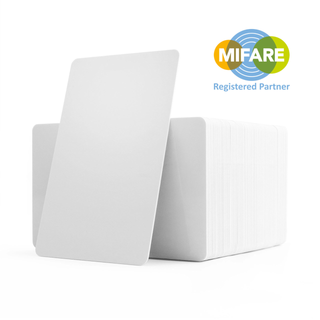
Description
The MIFARE® Classic 4K S70 contactless smart card delivers reliable high-frequency credential performance for organizations requiring secure identification, expanded data capacity, and broad compatibility with existing MIFARE® infrastructures. Operating at 13.56 MHz and compliant with ISO 14443 Type A standards, this smart card features 4 Kbytes EEPROM read/write memory for advanced credential applications including access control, transportation systems, parking programs, loyalty applications, campus credentials, and secure identification environments.
Manufactured in a standard CR80 credit card size with a professional gloss finish, the MIFARE® Classic 4K S70 provides dependable contactless operation at read distances up to 10 cm while supporting true anti-collision functionality for fast and accurate card communication. Its larger memory structure makes it an ideal solution for organizations requiring multi-application smart card capabilities within compatible MIFARE® reader systems.
Advanced 13.56 MHz Technology
The MIFARE® Classic 4K S70 utilizes proven 13.56 MHz RFID technology for secure contactless communication in a wide range of credentialing and transaction-based applications. With ISO 14443A compliance and anti-collision support, these cards are engineered for fast, consistent performance in busy environments where multiple cards may be present simultaneously.
- 13.56 MHz high-frequency - contactless
- MIFARE® Classic 4K S70 platform
- 4 Kbytes EEPROM read/write memory
- ISO 14443 Type A compliant
- True anti-collision functionality
- Contactless read range up to 10 cm
- No battery required
- CR80 credit card size format
- Gloss finish surface
Multi-Application Credential Systems
With its expanded 4K memory capacity, the MIFARE® Classic 4K S70 is well suited for organizations requiring more than simple identification. These cards can support multiple applications simultaneously, making them ideal for secure access, account tracking, transportation systems, parking credentials, loyalty programs, and integrated smart card deployments.
- Access control and secure building entry
- Public transportation and fare collection
- Parking access and toll applications
- Employee and student ID credentials
- Membership and loyalty programs
- Visitor management systems
- Campus and healthcare environments
- Scalable multi-application deployments
Applications for MIFARE® Classic 4K Cards
Access Control
Secure office buildings, healthcare facilities, schools, warehouses, and restricted areas using reliable MIFARE® smart card technology.
Transportation
Ideal for transit systems, airline ticketing, parking access, tolling systems, and park & ride programs requiring fast contactless transactions.
Photo ID Badging
The CR80 form factor and printable gloss finish make these cards excellent for employee badges, campus IDs, membership cards, and visitor credentials.
Loyalty Programs
Store customer data, membership information, account balances, and other application-specific data within compatible smart card systems.
Professional CR80 Format
Built to standard CR80 credit card dimensions, the MIFARE® Classic 4K S70 can easily integrate into ID badging systems, card printers, badge holders, and wallet-style credential programs. The gloss surface provides a clean, professional appearance suitable for custom graphics, logos, photo IDs, and branded credential applications.
Expandable Hybrid Card Capabilities
For organizations requiring broader system compatibility, these cards may also be enhanced with embedded contact smart chip modules or magnetic stripe technology. This flexibility allows one credential to support multiple technologies simultaneously for migration projects, hybrid environments, and multi-system credential deployments.
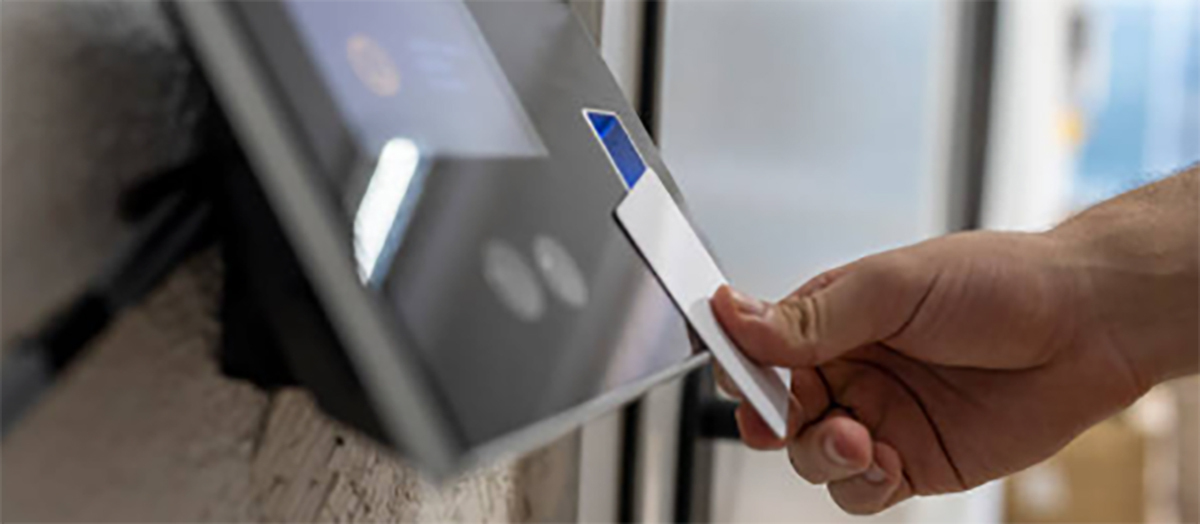
Dependable MIFARE® Smart Card Performance
The MIFARE® Classic 4K S70 contactless smart card remains one of the most trusted solutions for secure high-frequency credential deployments requiring expanded memory capacity, reliable read/write performance, and broad application support. Whether deployed for access control, transportation systems, customer loyalty programs, secure identification, or multi-application smart card environments, these 13.56 MHz credentials provide the performance, flexibility, and scalability organizations demand from modern contactless technology.
MIFARE UID vs. CSN vs. Serial Number: What Is the Difference?
When selecting or enrolling MIFARE Classic 4K S70 cards, terms like UID, CSN, and serial number are often used interchangeably. While these terms are closely related, they do not always mean the exact same thing. Understanding the difference is important when matching 13.56 MHz smart cards to access control readers, credential software, and existing cardholder databases.
In many access control systems, the reader may not use the encrypted memory sectors of the MIFARE card. Instead, it may simply read the card’s chip identifier and transmit that number to the access control panel. This is why UID, CSN, byte order, decimal conversion, and printed card numbering can all affect credential compatibility.
What Is a UID?
The UID, or Unique Identifier, is the actual identifier assigned to the RFID chip. For MIFARE cards, the UID is transmitted during the card anti-collision process when the card is presented to a compatible 13.56 MHz reader.
A traditional MIFARE Classic 4K S70 card is commonly associated with a 4-byte UID, which equals 32 bits. Some card types or chip generations may use a longer UID, such as 7 bytes, depending on the manufacturer and card technology.
What Is a CSN?
The CSN, or Card Serial Number, usually refers to the same chip identifier as the UID. In access control environments, many manufacturers and software platforms use the term CSN when describing the number read from the card.
In practical terms, CSN often means UID. However, the way that number is displayed or transmitted can vary by reader, software, output format, byte order, and decimal or hexadecimal conversion.
What Is a Serial Number?
The term serial number is more general and can mean different things depending on the system, manufacturer, or card supplier. It may refer to the UID, the CSN, a printed number on the card, an internal production number, or a programmed access control card number.
This is why a printed card number may not match the UID or CSN shown in access control software. A card can have one number printed on the surface while transmitting a completely different chip identifier to the reader.
Why It Matters for Access Control
Many access control readers read only the MIFARE card’s UID or CSN and then convert that value into an output format such as Wiegand, OSDP, or another system-supported format. This can make the same card appear differently across different reader brands or access control platforms.
For accurate enrollment and system compatibility, it is important to know whether your system reads the card’s UID/CSN, secure memory data, programmed credential number, facility code, or another encoded value.
UID, CSN and Serial Number Comparison
| Term | What It Usually Means | Access Control Notes |
|---|---|---|
| UID | Unique Identifier assigned to the chip | Often read directly by 13.56 MHz smart card readers |
| CSN | Card Serial Number, often the same value as the UID | May be shown in decimal, hexadecimal, or reversed byte order |
| Serial Number | General term that may refer to UID, CSN, printed number, or programmed number | Can cause confusion if printed numbering does not match software enrollment |
Hexadecimal vs. Decimal Display
A MIFARE UID may be shown as a hexadecimal value by one reader and as a decimal number by another system. For example, the same chip identifier may look different simply because the access control software converted the value into another number format.
Byte Order Can Change the Display
Some readers reverse the byte order of the UID or CSN before sending it to the controller. This means the same physical card can appear as different numbers in different systems, even though the chip identifier has not changed.
Printed Numbers May Be Different
A printed card number is often added for visual identification, inventory control, or enrollment convenience. That printed number is not always the same as the chip UID, CSN, facility code, or programmed card number.
Secure Memory vs. UID Reading
MIFARE Classic 4K cards include memory sectors that can support secure applications, but not every access control system uses those sectors. Some systems rely only on the card’s UID or CSN, while higher-security systems may use encrypted application data instead.
Frequently Asked Questions About UID, CSN and Serial Numbers
Is the UID the same as the CSN?
In many access control systems, yes. CSN commonly refers to the card’s UID. However, the number may be displayed differently depending on reader output, software settings, decimal conversion, or byte order.
Is the printed number on the card the same as the UID?
Not always. The printed number may be a visual card number, an inventory number, or a programmed credential number. It should not automatically be assumed to match the chip UID or CSN.
How many bits is a MIFARE Classic 4K S70 UID?
A traditional MIFARE Classic 4K S70 card commonly uses a 4-byte UID, which equals 32 bits. Some variants or compatible chip types may use longer UID lengths, so the exact specification should be verified when matching credentials to a system.
Why does the same card show a different number on another reader?
Different readers and access control platforms may convert, reverse, truncate, or format the UID/CSN differently. This is a common reason the same MIFARE card may appear differently across systems.
Need Help Matching MIFARE Cards to Your System?
Choosing the correct MIFARE Classic 4K S70 card depends on more than memory size alone. UID length, CSN output, reader configuration, printed numbering, and access control software settings can all affect compatibility. If you are replacing existing credentials or enrolling new cards, confirm whether your system requires UID/CSN reading, secure sector data, a specific card number format, or a programmed access control credential format.