Description
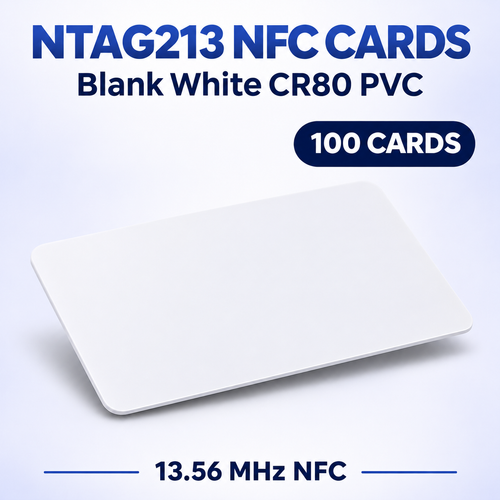
NTAG213 White CR80 NFC PVC Cards | 13.56 MHz | 100-Pack
Create tap-to-open business cards, loyalty cards, event passes, and promotional badges with NTAG213 white PVC NFC cards. Each glossy, blank white card features an embedded NXP NTAG213 chip and a standard CR80 credit-card footprint. Program a short URL or another compact NFC Data Exchange Format (NDEF) record to connect the physical card to a digital experience.
SKU PVC1-NTAG213 includes 100 cards, ready for your compatible printing and NFC encoding workflow.
Key Features
- 13.56 MHz NFC. NFC Forum Type 2 technology based on ISO/IEC 14443 Type A.
- 144 bytes of user memory. Suitable for short web links and other compact NDEF records. Formatting uses part of the available memory.
- Glossy white PVC. A blank surface for logos, cardholder details, or printed tap instructions when used with compatible card-printing equipment.
- CR80 format. Standard credit-card dimensions for common card holders and badge accessories.
Common Applications
- NFC business cards. Link to a digital contact page or company profile.
- Loyalty and membership cards. Open a rewards portal, registration form, or member page.
- Events and trade shows. Direct attendees to schedules, exhibitor information, or follow-up forms.
- Promotional cards. Link customers to a product page, survey, or campaign landing page.
Product Specifications
| SKU | PVC1-NTAG213 |
|---|---|
| Chip | NXP NTAG213 |
| Frequency and Protocol | 13.56 MHz NFC, NFC Forum Type 2, ISO/IEC 14443 Type A |
| User Memory | 144 bytes of read/write memory |
| Material and Finish | Blank white PVC, glossy finish |
| Card Size | CR80 – 85.60 × 53.98 mm (approximately 3.375 × 2.125 in.) |
| Listed Thickness | 820 µm (0.82 mm) |
| Pack Quantity | 100 cards |
NTAG213 vs. NTAG215 and NTAG216
All three chips support NFC Forum Type 2. Choose NTAG213 for short URLs and other small records. NTAG215 offers 504 bytes of user memory and NTAG216 offers 888 bytes for larger records. Check the encoded size of your content before choosing a card. For a digital business card, a short URL pointing to a hosted profile typically takes less space than a full contact record.
Frequently Asked Questions
Can I read and program these cards with a smartphone?
Use an NFC-enabled smartphone or reader that supports NFC Forum Type 2 tags. Writing requires a compatible NFC app or encoding tool. Test the encoded card with the devices your audience will use before programming the full pack.
Will these cards work in my existing door access system?
Check that the reader and software explicitly support NTAG213 and the way your system enrolls credentials. For systems that specify MIFARE Classic, MIFARE DESFire, HID Prox, or UHF credentials, order the chip type required by that system.
Can I change a link after programming the card?
You can rewrite the card while its memory remains writable. If you want to update the destination later without collecting the cards, encode a redirect URL that your organization controls.
Can I print and encode these cards with the same ID card printer?
Check that your printer supports the card material and thickness. To encode during printing, the printer also needs a compatible contactless encoding module and software with NTAG213 support. You can also print and encode in separate steps.
NXP Manufacturer Documentation
View the NXP NTAG213 / NTAG215 / NTAG216 Data Sheet (PDF)
Review chip memory, NFC protocol, and read/write behavior before selecting cards for your application.
Product Image Disclaimer: Product images are for illustration purposes only. Actual product appearance, packaging, and presentation may vary. Refer to the listed specifications for product details.